What is Ligma Disease? Symptoms, Diagnosis, Treatment & Myths
If you’ve come across the term ligma disease online, you might be wondering whether ligma can potentially become a real disease or just another fake internet trend. The phrase has sparked curiosity worldwide, leading thousands of users to search for its symptoms, causes, and treatment. The truth behind ligma disease is far from what it appears. In this article, I’ll break down what ligma desiese actually is, how it became so popular, and why it continues to confuse people across the world.
What is Ligma disease?
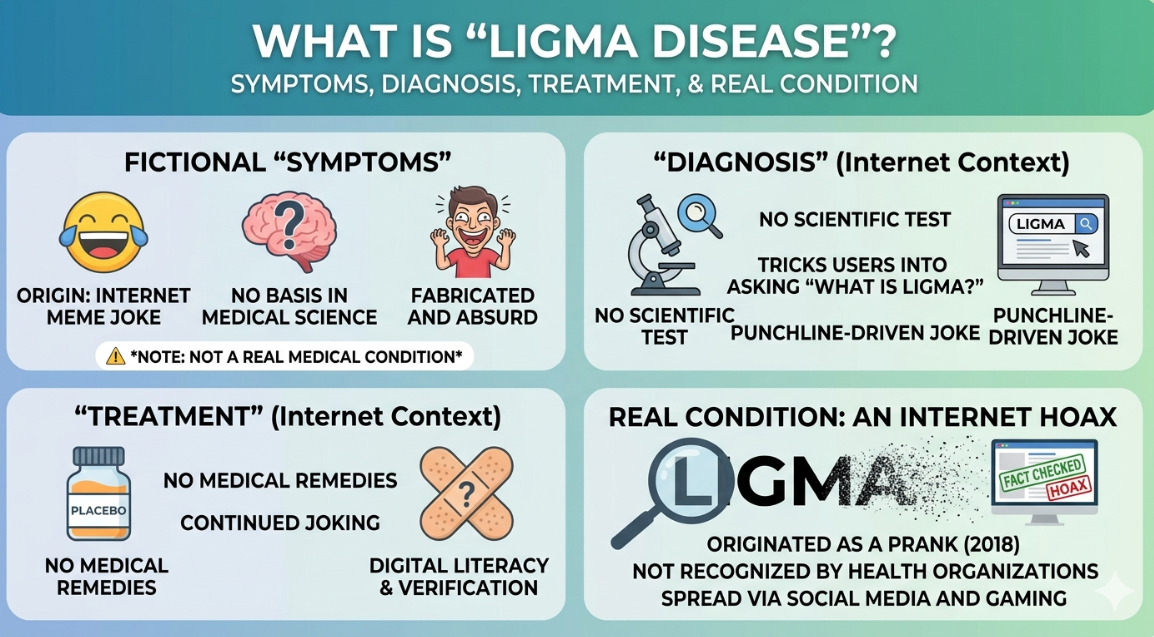
Ligma disease is not a real medical condition. It is a fictional term that originated from internet meme culture and became widely popular as part of online jokes and trolling trends. Although many people search for “ligma disease” expecting medical information, there is no scientific or clinical evidence that such a disease exists.
The term “ligma” first gained attention through viral internet pranks, where users were tricked into asking what it means, leading to a punchline-based joke. Over time, it spread across social media platforms like YouTube, Reddit, and gaming communities, often being mistaken by new audiences as a genuine illness.
Despite some online claims describing ligma as a fungal infection, cancer-like condition, or contagious disease, none of these descriptions are supported by medical science or health organizations. These misleading explanations are part of internet misinformation and meme evolution rather than factual medical reporting.
In reality, ligma disease is an example of how viral internet content can blur the line between humor and misinformation. It has no symptoms, no causes, no treatments, and no medical classification.
Understanding the origin of terms like ligma disease is important because it highlights how quickly false or humorous information can spread online and be misinterpreted as fact.
What are the symptoms of ligma disease?
Although ligma disease is not a real medical condition, it is often described in internet memes with a set of fictional signs and symptoms that mimic real illnesses. These symptoms are part of online humor and should not be considered medically accurate or related to any actual disease.
In meme-based descriptions, people jokingly associate ligma disease with general signs of illness such as fatigue or body discomfort. However, these claims are not supported by any scientific or medical evidence.
Symptoms of Ligma Disease may include:
- Fever or chills (fictional representation)
- Muscle aches or body pain
- Headaches
- Skin-related changes or “lesions” (not medically real)
- Breathing difficulty (used in exaggerated storytelling)
- Confusion or changes in mental state (meme exaggeration)
If someone is experiencing serious symptoms like
- seizures,
- difficulty breathing, or
- loss of consciousness in real life,
It is important to seek immediate medical attention, as these may be signs of genuine medical emergencies unrelated to any internet meme or fictional condition.
Causes of Ligma Disease
The exact cause of “ligma disease” is not recognized or supported by any medical or scientific evidence, and many healthcare professionals consider it a fictional or internet-based concept. Despite various online claims, there is no proof that it exists as a real, diagnosable condition.
Some sources incorrectly suggest that it may be contagious or caused by fungal infections, but these statements are not backed by clinical research. Similarly, ideas that it spreads through contact with saliva or other forms of exposure have no scientific validation.
Occasionally, genetics or lifestyle factors such as smoking and alcohol use are also mentioned, but these are not linked to any verified medical condition called “ligma.”
Overall, there is currently no established cause, transmission method, or medical classification for this term, and it should not be considered a legitimate disease based on available evidence.
Diagnosing the Ligma Disease
In many cases, healthcare professionals state that there is no confirmed treatment or standardized diagnostic approach for “ligma disease,” largely because it is not recognized as a real medical condition. However, based on commonly circulated (though unverified) descriptions, the following methods are sometimes mentioned when people attempt to “diagnose” it.
- Scans (CT or MRI)
Doctors may recommend imaging tests such as CT scans or MRI to check for any unusual changes in the brain or other organs. In some descriptions, these scans are said to look for signs of fungal growth or internal damage, though there is no scientific evidence supporting “ligma disease” findings.
- Biopsy
A lymph node biopsy is sometimes mentioned as a way to analyze tissue samples for potential abnormalities. This is described in some sources as checking for possible disease-related damage, but it is not linked to any real condition known as ligma.
- Blood Tests (CBC)
A complete blood count (CBC) may be suggested to evaluate overall health and rule out other medical conditions. However, it does not diagnose “ligma disease,” as no such disease is medically established.
- Lumbar Puncture (CSF Test)
In some claims, a lumbar puncture is described as a method to examine cerebrospinal fluid (CSF) for neurological issues. This is a general medical procedure used for real conditions, but it is not associated with any verified diagnosis of ligma disease.
What are the Ligma disease treatment Options?
There is no scientifically recognized treatment for “ligma disease” because it is not an established medical condition. Most healthcare professionals consider it a fictional or internet-based concept, and therefore no standardized medical treatment exists.
However, based on commonly circulated (but unverified) descriptions, the following treatment approaches are sometimes mentioned:
1. Surgery
In some descriptions, surgery is suggested to remove lumps or abnormal growths that are believed to be caused by the condition. In real medical practice, surgery is only performed when there is a confirmed diagnosis of an actual disease.
2. Medicines and Antibiotics
Some sources claim that medications or antibiotics can help control infection. However, since “ligma disease” has no confirmed infectious cause, there is no specific medicine used to treat it.
3. Pain Relief Medications
Over-the-counter pain relievers are sometimes mentioned to reduce discomfort or inflammation. These only manage general symptoms and are not a treatment for any specific “ligma” condition.
4. Chemotherapy and Targeted Therapy
Certain claims suggest chemotherapy or targeted therapy may be used due to supposed cancer-like behavior. In reality, these treatments are only used for medically diagnosed cancers, not for unverified conditions.
5. Radiation Therapy
Radiation therapy is also sometimes listed as a treatment option in fictional descriptions. It is a real medical procedure, but it is not used for any condition called “ligma disease.”
6. Healthy Lifestyle Support
General advice such as maintaining a healthy diet, regular exercise, and good lifestyle habits is often included. While beneficial for overall health, these do not treat any specific disease unless medically diagnosed.
How to Prevent Ligma Disease Before It’s Too Late
There is no scientific evidence that “ligma disease” exists, and therefore no proven prevention or medical guidelines are available. It is widely regarded as an internet-based fictional condition rather than a real infectious disease.
However, based on commonly circulated (but unverified) claims, the following preventive steps are sometimes mentioned:
1. Avoid Close Contact with Infected Individuals
Some sources suggest avoiding contact with people who are said to be infected. In real medical practice, avoiding close contact is a general hygiene measure for actual contagious diseases, but it does not apply to “ligma” since it has no confirmed existence.
2. Use Protective Measures
Wearing gloves, masks, or other protective clothing is sometimes mentioned in online descriptions. These are standard precautions for real infections, but there is no evidence they are needed for “ligma disease.”
3. Vaccination Awareness
It is often claimed that staying up to date with vaccinations may reduce risk. However, there is currently no vaccine for “ligma disease,” and no medical authority recognizes it as a condition requiring immunization.
4. Maintain Good Hygiene
Practicing general hygiene—such as frequent handwashing and avoiding contact with sick individuals—is always beneficial for overall health, but it is not specifically related to preventing “ligma disease.”
Alternative Therapies for Ligma
In the context of Ligma Disease as a fictional entity, alternative therapies are often depicted in a satirical light, reflecting the creative imagination of internet culture. If Ligma were to potentially become a real condition, alternative therapies might include holistic approaches such as herbal remedies, dietary changes, and lifestyle modifications, all aimed at managing the fictitious symptoms of the disease. The humor around "contracting Ligma" often extends to these alternative treatments, with playful suggestions of unconventional remedies like "bofa" and other internet slang. While there is no real efficacy to these therapies, their prominence in memes underscores the playful intersection of satire and health advice in digital spaces.
The Debate: Is “Ligma” a Real Disease?
The question is ligma a real disease is widely discussed online, but it is not recognized as a real medical condition in any scientific or healthcare system yet. Most evidence points to it being an internet hoax or meme rather than an actual disease.
1. Medical Perspective
From a medical standpoint, “ligma” does not exist as a diagnosable illness.
- It is not listed in any official disease classifications or medical textbooks
- No clinical studies or verified patient cases support its existence
- Healthcare professionals do not recognize it as a real condition
2. Internet and Pop Culture Origins
The term “ligma” is commonly associated with internet jokes and memes.
- It gained popularity as part of viral prank-style content online
- It is often used to mislead or trick people in humorous contexts
- Over time, it has been mistakenly treated as a “fake disease story”
3. Why Some People Think It’s Real
There are a few reasons why confusion exists:
- Misleading online posts that describe fake symptoms and treatments
- Repetition of unverified information across social media
- Lack of awareness about medical fact-checking
4. Scientific Conclusion
Based on current evidence, “ligma” is not a real disease. It has no biological cause, no diagnostic criteria, and no medical recognition. It is best understood as a fictional or meme-based concept rather than a health condition.
Historical Context of Ligma Disease
The Ligma phenomenon began as a prank within gaming communities, with the term gaining traction following a death hoax related to the popular video game streamer Ninja. The idea of Ligma Disease was rapidly adopted by the online community, evolving into an elaborate joke that poked fun at the spread of misinformation. As memes and jokes circulated, individuals pretended to have contracted Ligma, often incorporating elements of medical terminology to enhance the illusion. This historical context underscores the power of the internet in shaping narratives and the ease with which fictional concepts like Ligma can gain perceived legitimacy.
Future Directions in Ligma Treatment
Looking ahead, the future directions in treating Ligma Disease, should it ever transcend its fictional roots, would likely focus on innovative medical research and technological advancements. The concept of Ligma as a real disease invites speculation on the potential development of vaccines and new treatment modalities designed to target the supposed infection. This could involve cutting-edge research into the imagined viral agents and their impact on lymph nodes, as humorously depicted in memes. The idea of future treatment options serves as a parody of real-world medical advancements, reflecting the ongoing dialogue about how quickly misinformation can transform into accepted narratives, much like the viral spread of the Ligma meme itself.
Research and Studies on Ligma
Despite Ligma initially being a fake disease popularized by internet memes, including the infamous "ligma balls" joke, there have been curious discussions about whether it could potentially become a real disease. Some enthusiasts within the scientific community have whimsically speculated on what research into Ligma might involve if it were a genuine condition. Imaginary studies might focus on the symptoms of the disease, such as the humorous swelling of the lymph nodes or the fictitious viral infection narrative, and explore potential treatment options. While these discussions are largely satirical, they highlight the impact of internet culture in shaping conversations about medical conditions, even when they're purely fictional.
Public Awareness and Misconceptions
The rise of Ligma as an internet meme has led to widespread public awareness, albeit with a significant dose of humor. The misconception that Ligma could be a real disease stems from its pervasive presence in digital conversations, especially following the viral death hoax involving video game streamer Ninja. This has blurred the lines between reality and fiction, leading some to question its legitimacy as a medical condition. The term "Ligma" and its meaning have become synonymous with online pranks, yet they underscore the broader issue of how easily misinformation can spread. The public's fascination with Ligma reflects the power of internet culture in creating and sustaining myths.