Video Laryngoscopes: A Complete Guide

Video laryngoscopes have transformed modern airway management, offering clinicians a clearer, safer, and more reliable way to perform endotracheal intubation. From emergency departments to ICUs, operating rooms, and prehospital environments, these devices have become essential tools—especially in difficult airway situations. This article provides a deep, practical breakdown of how video laryngoscopes work, their benefits, types, major brands, and how to choose the right model for your clinical needs.
1. What Are Video Laryngoscopes?
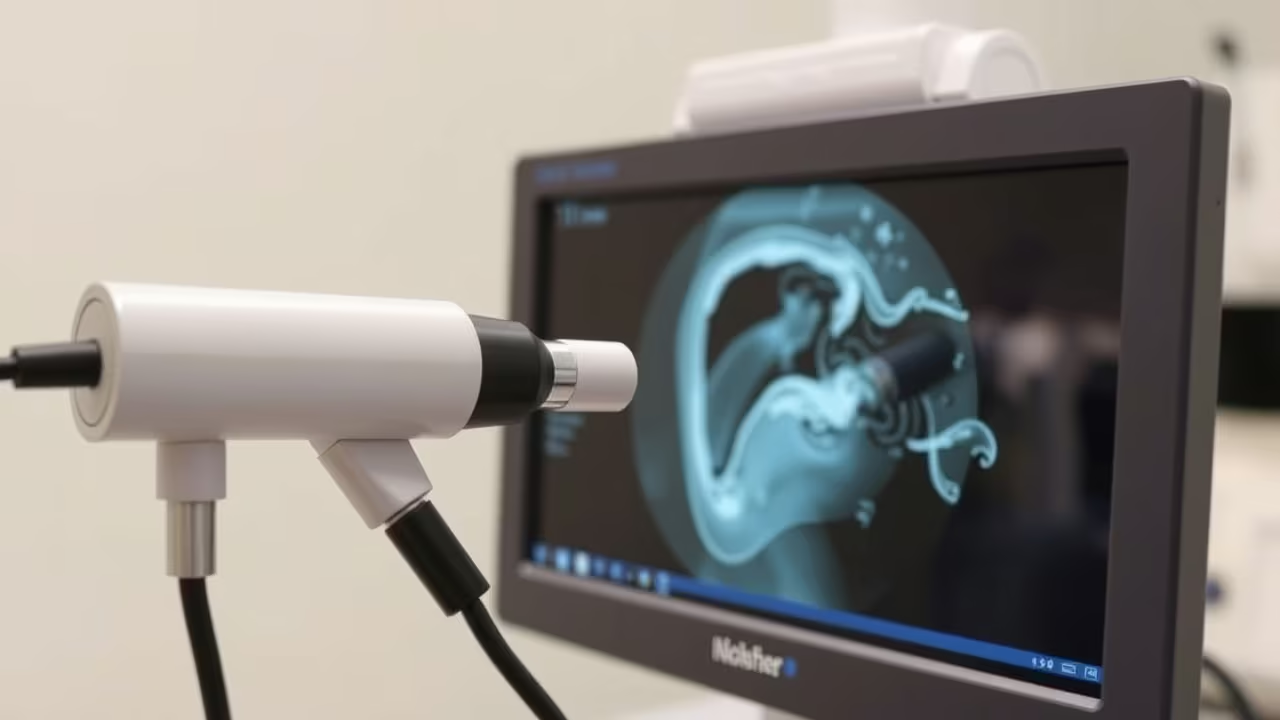
Video laryngoscopes are advanced airway devices used to assist healthcare professionals in visualizing the larynx during intubation. Unlike direct laryngoscopy—where the clinician must align the oral, pharyngeal, and laryngeal axes—video laryngoscopes use a tiny camera at the blade tip to display a magnified view of the vocal cords on a screen.
This fundamental difference allows providers to intubate with indirect visualization, significantly improving success rates—especially in patients with difficult airways.
How They Work
A typical video laryngoscope consists of:
Handle: Provides grip and houses the power source.
Blade: Contains a built-in camera, LED light, and sometimes an anti-fog lens.
Display Screen: Can be integrated or external; shows real-time video of the airway.
Optional Accessories: Reusable or disposable blades, stylets, and compatible monitors.
Once the blade is inserted into the mouth, the camera transmits a high-resolution image of the glottis to the screen, guiding the clinician to place the endotracheal tube with minimal manipulation.
Why Video Laryngoscopes Matter
They have rapidly become the preferred option in many clinical settings because they:
- Improve first-attempt success rates
- Reduce airway trauma
- Provide superior visualization
- Are easier for trainees to learn
- Allow team members to see the airway view simultaneously
- Enhance patient safety
2. Benefits of Video Laryngoscopes
Healthcare providers choose video laryngoscopy not only for difficult airway cases but increasingly for routine intubations due to the strong clinical advantages they offer.
1. Higher First-Pass Success Rate
Studies show that video laryngoscopes achieve a significantly better first-attempt success rate compared to direct laryngoscopes. This is crucial, as failed first attempts increase risks such as hypoxia, aspiration, and airway trauma.
2. Improved Visualization
The camera provides:
- Enlarged glottic view
- Better exposure in anterior airways
- Enhanced view despite limited mouth opening
- Visibility even when anatomical alignment is difficult
This makes them especially valuable in emergencies or trauma situations.
3. Reduced Airway Trauma
Because the user does not need to apply as much force or manipulate the airway aggressively, patients experience:
- Less dental injury
- Fewer soft tissue injuries
- Reduced risk of airway swelling
The anti-fog and LED illumination features also ensure a clear image throughout.
4. Better Training & Team Communication
Video laryngoscopes allow instructors and team members to see the same view as the clinician performing the intubation. This real-time visualization:
- Improves training efficiency
- Enhances supervision
- Helps teams anticipate next steps
- Supports better coordination during critical events
5. Suitable for a Wide Range of Patients
Video laryngoscopes are beneficial for:
- Obese patients
- Anatomically difficult airways
- Cervical spine immobilization
- Trauma patients
- Pediatric and adult populations
- Limited neck mobility cases
Their adaptability makes them a universal tool across diverse specialties.
3. Types of Video Laryngoscopes
Video laryngoscopes come in multiple designs, each suited for specific clinical environments and patient needs. Understanding these categories helps clinicians choose the right device for the right scenario.
1. Standard Video Laryngoscopes
These devices resemble traditional Macintosh or Miller blades but include a built-in camera. They offer a familiar approach and are excellent for routine and slightly difficult airways.
Popular examples:
- McGRATH MAC
- GlideScope AVL
- C-MAC Video Laryngoscope
2. Hyper-Angulated Video Laryngoscopes
These have a more sharply curved blade, allowing visualization of the glottis without aligning the airway axes. They are ideal for:
- Anterior airways
- Obese patients
- Small mouth opening
- Cervical immobilization
Examples:
- GlideScope Ranger
- King Vision aBlade
- Airtraq (video-enabled versions)
3. Portable / Handheld Video Laryngoscopes
Suitable for prehospital or emergency environments. They are:
- Lightweight
- Battery-operated
- Designed for rapid deployment
Examples include:
- McGRATH MAC Portable
- King Vision Video Laryngoscope
- ProVu Video Laryngoscope
4. Modular & Multi-Component Systems
These include a blade-camera module connected to a separate high-resolution monitor. They are commonly used in operating rooms and ICUs where durability and image quality are priorities.
Examples:
- Karl Storz C-MAC System
- GlideScope Core Systems
These devices often integrate patient data, documentation, and video recording capabilities.
4. Popular Video Laryngoscope Brands & Their Key Features
Different brands offer unique advantages. Here’s a breakdown of the most recognized names in the industry.
1. McGRATH Video Laryngoscope
One of the most widely used devices globally due to its affordability, portability, and ease of use.
Key Features:
- Lightweight, ergonomic design
- High-quality LCD screen
- Disposable blades (MAC 1–4)
- Excellent for routine and difficult airways
- Popular in anesthesia and emergency medicine
Common searches:
mcgrath video laryngoscope price, mcgrath mac battery, buy mcgrath video laryngoscope
2. King Vision Video Laryngoscope
Known for its cost-effectiveness and versatility, especially in prehospital settings.
Key Features:
- Disposable aBlade options
- Channeled and non-channeled blades
- Anti-fog technology
- Affordable without sacrificing image quality
Common searches:
king vision video laryngoscope price, king vision blades, king vision for sale
3. C-MAC (Karl Storz) Video Laryngoscope
A premium, hospital-grade system preferred for its durability and high-definition imaging.
Key Features:
- Reusable stainless-steel blades
- High-quality video output
- Integration with OR/ICU systems
- Compatible with D-blade for difficult airways
Common searches:
c mac video laryngoscope, c mac d blade, c mac price, c mac vs others
4. GlideScope Video Laryngoscope
A pioneer in the industry, known for hyper-angulated blades and crystal-clear imaging.
Key Features:
- AVL, Ranger, and Core systems
- Fog prevention technology
- Superior visualization for anterior airways
- Widely used in advanced airway management training
Common searches:
glidescope price, glidescope video laryngoscope, glidescope vs others
5. How to Choose the Right Video Laryngoscope
Selecting a video laryngoscope depends on several clinical, operational, and budget considerations. Since different models are optimized for different environments, choosing the right one can significantly affect intubation success and workflow efficiency.
1. Clinical Environment
Your setting plays a major role:
- Operating Room (OR): Prioritize premium imaging, reusable blades, modular monitors (e.g., C-MAC, GlideScope Core).
- Emergency Department (ED): Look for rugged, quick-start, portable models with disposable blades (e.g., McGRATH MAC, King Vision).
- ICU: Durable systems with advanced visualization are preferred.
- Prehospital / EMS: Lightweight, battery-powered models that withstand harsh environments (e.g., King Vision, McGRATH Portable).
2. Patient Population
Choose based on the type of patients you treat most often:
- Adult patients: Standard MAC blades or hyper-angulated options
- Pediatrics: Devices offering smaller blade sizes
- Difficult airways: Hyper-angulated blades (GlideScope, King Vision aBlade)
3. Blade Type & Compatibility
Consider whether you prefer:
- Reusable blades: Long-term cost-saving, durable, ideal for OR.
- Disposable blades: Better infection control, recommended for ED/EMS.
- Channeled blades: Extremely helpful for guiding the endotracheal tube in challenging cases.
4. Image Quality
A critical factor, especially in difficult airway cases. Look for:
- High-resolution screens
- Anti-fog technology
- Bright LED illumination
- Wide viewing angles
- Minimal lag or latency
Better visualization directly correlates with higher success rates.
5. Battery Life & Durability
In emergency conditions, devices must be reliable:
- Long battery life for field use
- Rugged housing for drops or transport
- Water-resistant or easy-to-clean surfaces
6. Budget & Maintenance Costs
Consider not only the device cost but also:
- Blade cost (disposable or reusable)
- Cleaning/sterilization requirements
- Replacement parts (battery, screen, stylets)
- Warranty and support services
Some brands like King Vision offer lower-cost market options, while systems like C-MAC or GlideScope may be more premium.
6. Video Laryngoscopes vs. Direct Laryngoscopes
The debate between video and direct laryngoscopy has evolved significantly over the past decade. While direct laryngoscopes (DL) remain widely used, video laryngoscopes (VL) have clear advantages.
1. Visualization
- VL: Magnified, illuminated, indirect view
- DL: Limited view, especially during difficult positioning
Video provides a much better glottic view, reducing airway complications.
2. Learning Curve
- VL: Easier for trainees, real-time observation by instructors
- DL: Requires skill in aligning airway axes
Video laryngoscopy has become a training standard in many institutions.
3. Patient Safety
VL reduces:
- Failed attempts
- Hypoxemia events
- Dental trauma
- Soft tissue injury
This makes it the safer choice for both routine and difficult intubations.
4. Versatility
VL is suitable for:
- Trauma
- Obese patients
- Limited mouth opening
- Spine immobilization
DL struggles significantly in these situations.
Conclusion:
Direct laryngoscopy still has a place, especially in low-resource settings, but video laryngoscopes are increasingly considered the superior and safer option for most clinical scenarios.
7. Practical Tips for Using Video Laryngoscopes
Even though VL improves visualization, proper technique ensures optimal outcomes.
1. Position the Patient Correctly
Use the sniffing or ramped position for best results, especially in obese patients. Even with VL, positioning remains important.
2. Insert the Blade Gently
Avoid excessive force; let the camera guide you.
3. Use a Pre-Shaped Stylet
Most hyper-angulated blades require an appropriately shaped stylet:
- Pre-shape to match the curve of the blade
- Remove stylet smoothly after passing the glottis
4. Keep the Camera Clean
Blood, secretions, or fog can obscure the view. Choose models with:
- Anti-fog coatings
- Channel flush options
- Disposable blade covers
5. Practice Regularly
Familiarity breeds confidence. Practice on manikins and routine cases to build consistent skills.
8. The Future of Video Laryngoscopes
The next generation of video laryngoscopes aims to integrate even more advanced technology to improve airway management. Expect innovations such as:
- AI-assisted airway recognition
- Augmented reality overlays
- Wireless connectivity for training
- Cloud-based video storage
- Smaller, lighter, more flexible cameras
As technology evolves, VL devices will continue to become more accessible, user-friendly, and indispensable in clinical practice.
Conclusion
Video laryngoscopes have revolutionized airway management, offering unparalleled visualization, increased success rates, and enhanced patient safety. Whether you're working in the OR, ED, ICU, or prehospital environment, having the right video laryng
